
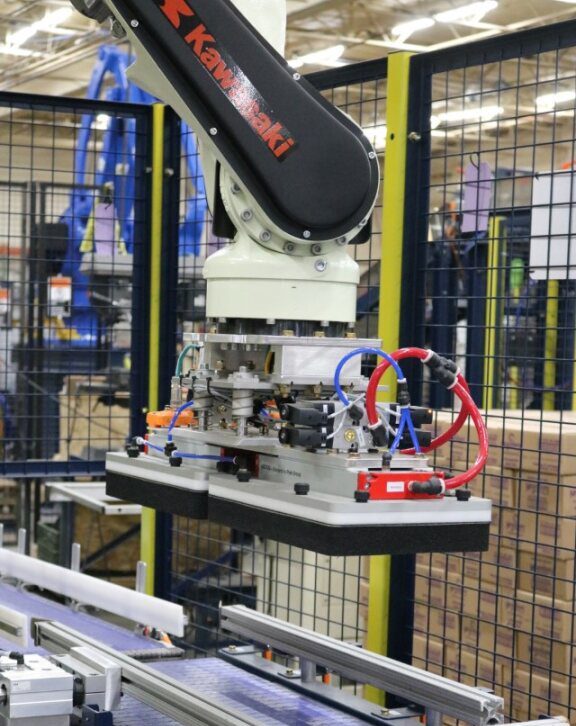
If you walk through any plant that’s still palletizing by hand, you’ll notice the same issues—workers bending, twisting, and lifting heavy bags over and over again. It’s exhausting work, and it’s not sustainable. Many operations hesitate to invest in automation because they’re only looking at the upfront equipment cost. But what about the hidden costs of staying manual?
Labor Strain and Injuries
Manual palletizing is one of the most injury-prone jobs on a packaging line. Repetitive lifting leads to back, shoulder, and knee issues. Worker’s comp claims, downtime, and turnover add up quickly. Automation removes that risk, giving your employees safer, less physically demanding roles.
Inconsistent Pallet Quality
When people stack bags all day, fatigue sets in. Pallets become uneven, bags lean, and stability suffers. That leads to damaged loads during shipping, rework, and unhappy customers. Automated palletizers—whether robotic or conventional—deliver consistent, repeatable stacks every time.
Labor Availability Challenges
Finding and retaining employees willing to do heavy, repetitive work is harder than ever. Automation fills that gap. NOVA’s palletizers can run reliably across multiple shifts, reducing your reliance on labor that’s increasingly scarce.
Productivity Gaps
Manual stacking slows the entire line. If your bagger can run 20 bags per minute but workers can only stack 10, your throughput is limited. Automation eliminates that bottleneck and ensures you’re getting the most out of your bagging equipment.
Where NOVA Fits In
NOVA Automation offers both robotic palletizers like the NRP-200 and conventional high-speed systems. Whether you need flexibility for multiple SKUs or maximum throughput for bulk bags, we’ve got a solution that eliminates the hidden costs of manual stacking.
Ready to reduce injuries, labor costs, and shipping damage? Let’s talk about which palletizing solution fits your line best.

